
Instrument Types in Franklin City Deed Records
Land instruments in Franklin City are maintained through the Circuit Court clerk system. Virginia names this office the Clerk of the Circuit Court rather than a county recorder. Franklin City sits in the Fifth Judicial Circuit. Even so, its neighboring localities keep land records of their own. Always anchor a deed search with the locality and the legal description. That keeps the results tied to the right tract. The instruments below can all surface in a property chain. Menu labels in the Franklin City search system may differ slightly from these groupings.
| Instrument | What it can document | Why a property researcher checks it |
|---|---|---|
| Deed | A recorded conveyance from grantor to grantee | To confirm a transfer and read the legal description |
| Deed of trust | A recorded security interest tied to a loan | To identify a possible recorded encumbrance |
| Release or certificate of satisfaction | Release of a recorded secured obligation | To see whether a recorded interest was later cleared |
| Plat or easement | Recorded lot geometry, access, or rights affecting land | To connect a legal description with a subdivision or route |
| Judgment, lien, or lis pendens | A recorded claim or notice affecting an interest | To flag a matter for clerk or title review |
Franklin City deed records can include corrections, assignments, trustee instruments, wills, and fiduciary filings. Miscellaneous records round out the set. A title alone never tells the whole story. Read the recorded instrument itself, along with any later release or correction. When a transaction depends on the outcome, ask a title professional to review the full chain before you act.
Virginia Circuit Clerks and Franklin City Deed Records
Deeds in Franklin City live with the circuit court, not the assessor. The city handles its own real-estate assessments. Deeds, deeds of trust, and other land instruments sit in the circuit clerk's record books. Statewide systems such as SRA and COVERS open a remote route to indexes. Where a clerk enables it, they open document images too. Franklin City falls within Circuit 5, grouped with Southampton, Isle of Wight, and Suffolk for court administration. That grouping does not merge their parcel rolls. A search run in Franklin County can miss a Franklin City instrument. A search run in a neighboring city can miss one entirely.
The parcel number helps. So does the legal description. Both come from the Franklin City assessment portal, and both are the best tools for narrowing a name search. Names get crowded. A grantor may share a common surname. A grantor may carry a middle initial, appear under an estate label, or hold title in an entity name. Before accepting a result, compare the instrument locality and the property description. The clerk's office publishes no street address or direct phone line on its official pages. Confirm the contact route through the court's own channels before seeking certified copies or asking about local procedure.
The Virginia court circuit map places Franklin City in Circuit 5. It supplies judicial geography only; the city assessment and Treasurer systems remain separate from it. When running a deed search, select Franklin City as the locality wherever the SRA interface offers that choice.
Franklin City Deed Records: SRA Index and Paid Images
Virginia's land-record access system splits the index from the images. The official SRA information states that some clerks turn on free index-only access. Images go only to subscribers the local clerk authorizes, under an agreement and applicable fees. The state publishes no Franklin City start year, image price, result cap, or full list of document-type filters. Treat any fee figure or coverage cutoff you see elsewhere with caution unless the clerk states it.
An index entry still carries real value. Note the parties, the date, the instrument or book-and-page reference, and the locality the live system displays. If the image sits behind a subscription, follow the clerk's terms. Or ask the local office for access. Reading the document itself matters. A deed can hold exceptions, easements, a correction, or an estate conveyance that no index line reveals.
The SRA public access page explains the split between index and image access. The page is the statewide landing screen rather than a Franklin-specific date range. Treat it as your entry point into Franklin City deed records.
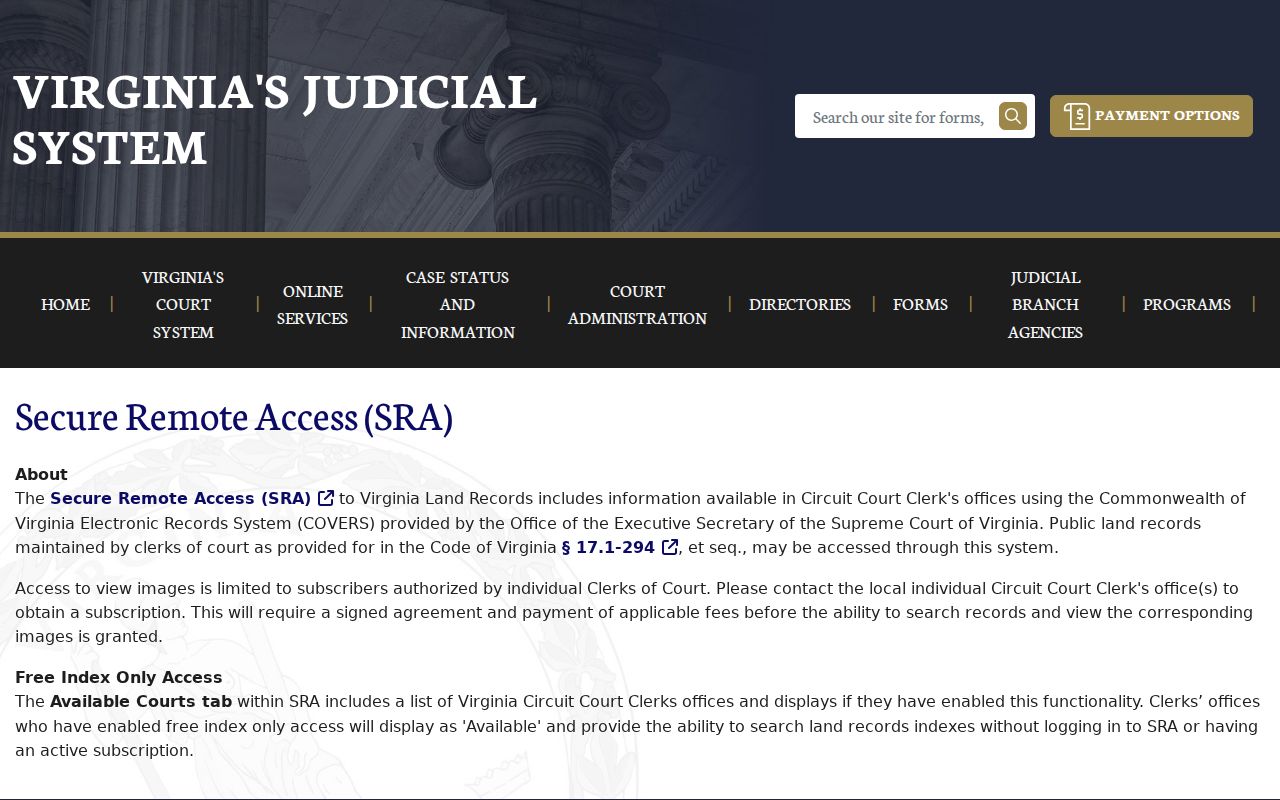
Use the landing page to understand how access works. Then verify Franklin City's options in the search system or with the clerk.
Reading the Franklin City Grantor and Grantee Deed Index
The grantor conveys an interest. The grantee receives it. A chain check needs both roles. Start with the assessment owner name. Search for a deed where that party appears as grantee, then read the grantor name and search backward from there. At each step, compare the parcel, locality, and legal description. A matching name without matching land proves nothing. An entity suffix or fiduciary capacity can change the index entry altogether.
SRA search controls commonly include party name, document type, date range, instrument number, or book and page as general land-record concepts. Treat them as possibilities rather than a confirmed Franklin City field list. If a result is unclear, pull a known instrument reference from Franklin City assessment or Treasurer records. Alternatively, ask the clerk how the Franklin locality is indexed.
The SRA/COVERS search screen is the system's public endpoint. It can orient you to the search system. It does not imply a specific field set or a Franklin City record sample.
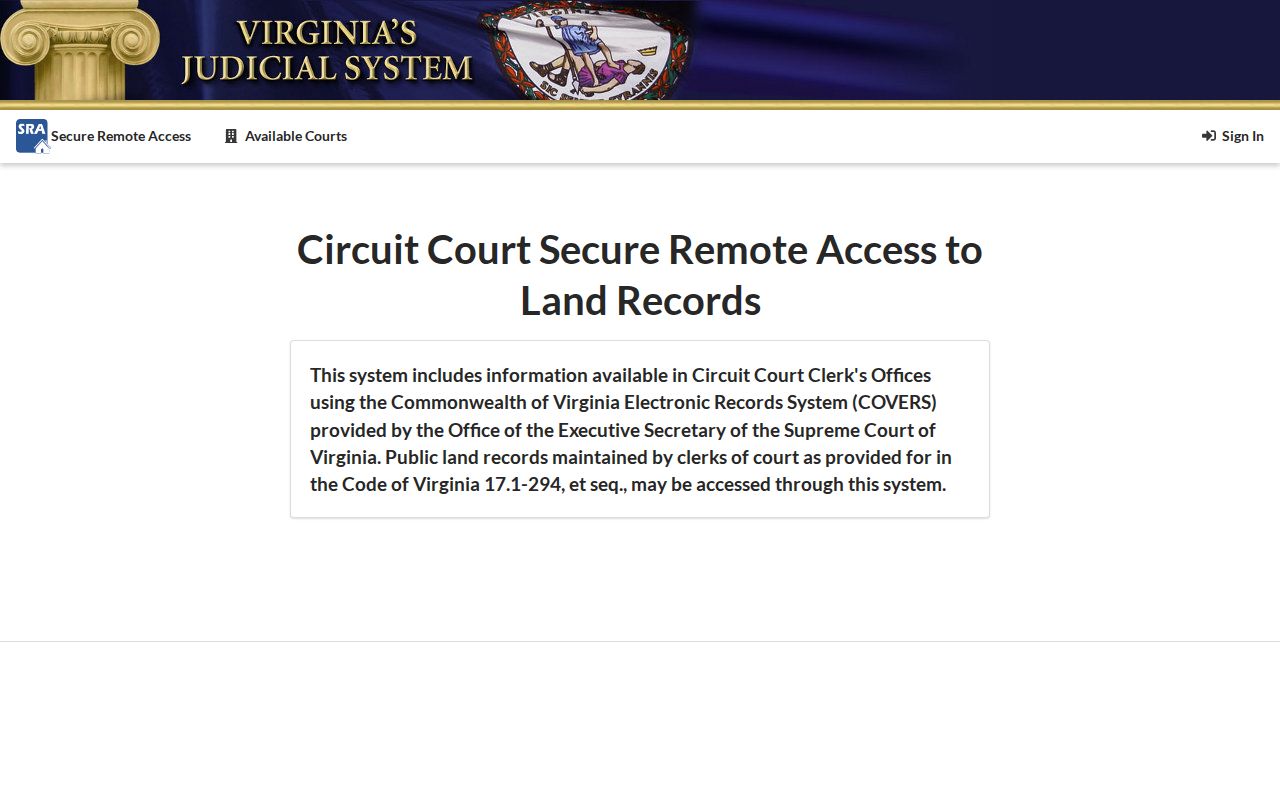
Keep a written chain with each grantor, grantee, date, instrument reference, and legal-description match.
Confirming a Deed in Franklin City Deed Records
Start with the parcel number, not the owner's name. The assessment roll gives you that key. Find the newest likely deed in the index. Then confirm that the parties and legal description fit the same Franklin City tract. Pull the recorded image if the local access terms allow it. Subscriber-only images still leave options. You can arrange authorized access or request a copy from the clerk. Verifying the reference this way saves you from tracing earlier transfers for nothing.
- Write down the assessment owner and parcel number.
- Search for a deed where that owner is the grantee.
- Compare the grantor, recording date, locality, and land description.
- Check later corrections, releases, or related filings when the chain calls for them.
- Ask the circuit custodian for a certified copy if a formal record is required.
Franklin City's assessment portal updates its roll monthly. The deed itself is the circuit record of the transfer. A recent sale can leave the deed newer than the roll. No standard update lag appears in the records. Compare actual recording dates. Compare them against portal dates. Do not assume a fixed number of days.
Franklin City Deed Records: Trusts, Releases, Plats, and Liens
A Franklin City property review goes beyond warranty and quitclaim deeds. Deeds of trust and mortgages document a security interest. A release or certificate of satisfaction clears it later. Easements and rights-of-way describe access or utility rights. A plat shows a recorded subdivision layout. A correction deed can clarify an earlier instrument, and the search screen publishes no document-type dropdown.
An older index result does not mean a lien went unpaid. Look for a later release, and let a title professional interpret the chain. The reverse holds too. A tax account paid to the City proves nothing about other recorded interests, because deed records and tax records answer different questions even when both use the same parcel number.
When an instrument cites a plat or map book, note the reference. Search for the recorded plan as its own document. That link can explain lot boundaries and shared access. The map still cannot replace a current survey.
Franklin City’s Older Deed Records and Archive Route
No official source names a start year for Franklin City's online deed index or its older book coverage. So do not claim the index reaches back to any set year. Instruments missing from the interface have other routes. Ask the circuit clerk about earlier deed books, microfilm, or a local index. The Library of Virginia operates as a state archive and catalog gateway for historical land and tax materials. Its catalog shows what Franklin City holdings exist.
Franklin's own history complicates older searches. The city incorporated as a town in 1876. It became a city in 1961. Annexations in 1960, 1986, and 1996 expanded its boundaries further. A modern parcel may carry older documents labeled by a prior locality, or described by a road, creek, or tract name. Search people and land descriptions together rather than trusting the current mailing address alone.
Start with the Library of Virginia catalog gateway. It leads to verified state archival holdings. Even so, it does not guarantee that every city deed book is digitized or searchable online.
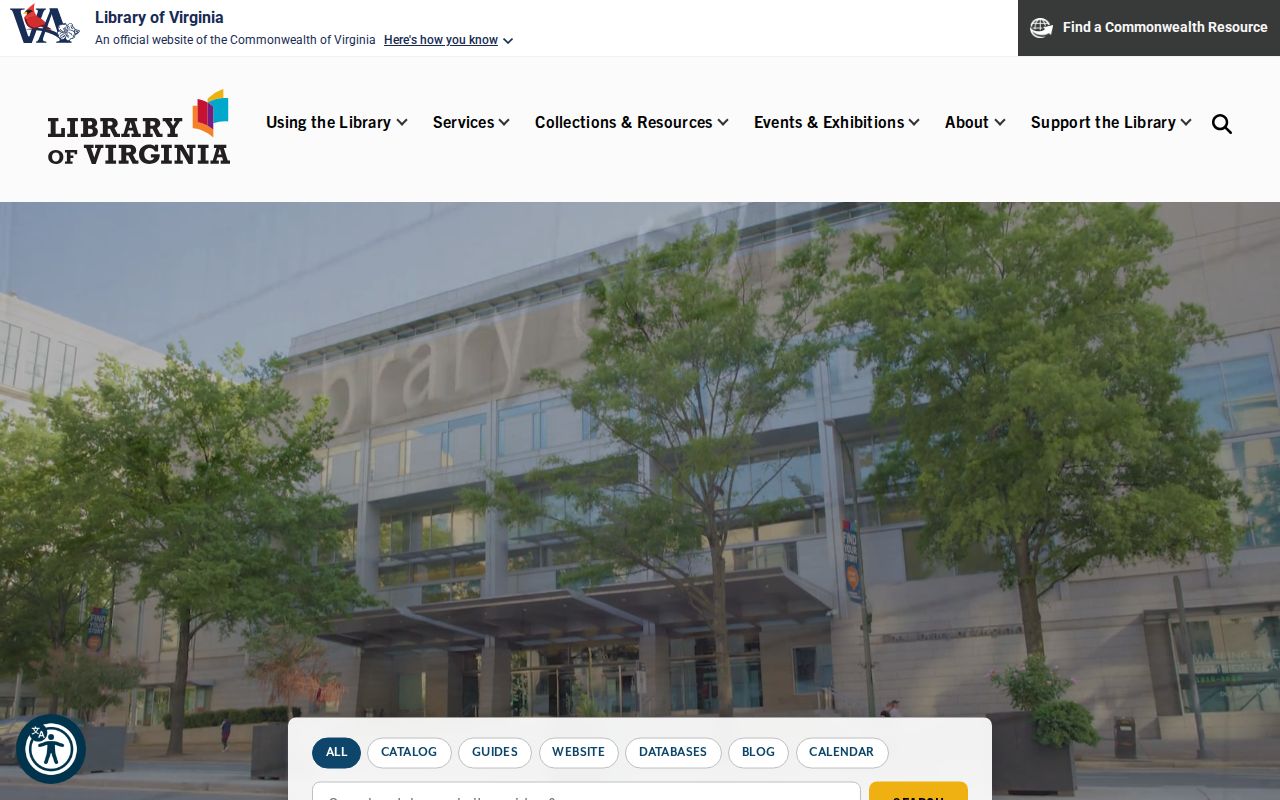
Treat the archive as a route to holdings information, then confirm the record series and years.
Franklin City Deed Records and Tax-Sale Transfers
The City's 2026 sale notice shows why a tax sale is not a simple deed lookup. The auction runs online only. Payment in full is due on sale day. A 15 percent buyer's premium and a 200 dollar recordation fee also apply. The property sells as is. The notice further flags possible easements, liens, encumbrances, possession, encroachments, overlaps, gaps, environmental matters, and other risks it identifies.
Those terms describe the sale process. They are not a status report for every parcel. Use a listed parcel number to identify the tract, then review the recorded instruments, legal description, and current survey before drawing conclusions. A sale notice is no guarantee of clear title. The sale can transfer an interest, but its legal effect and any surviving matters still require professional review.
The former owner chain guide explains how to move backward through prior grantees for a single deed copy. Deed confirmation is a different task. It starts with instrument type, index access, and the recorded chain itself.
Getting Help with Franklin City Deed Records
Contact the custodian when something does not add up. Maybe the index omits an expected party. Maybe a name is indexed in an unfamiliar form. A restricted image or a legal description that clashes with the assessment record counts too. Do not substitute the General District Court clerk's contact details for the Circuit Court land-record custodian. Those are two different clerk functions.
Virginia's Freedom of Information Act can open a path to records held by a public body, subject to exceptions and applicable fees. A strong request names the instrument type, parcel, parties, date range, and any system reference already found. The goal is the record the office actually holds. For a certified land record, ask the circuit clerk about the proper copy process. A general web result is not a legal opinion. It cannot stand in for what the custodian's file shows.