
How to Find Who Owns a Franklin City Property
Start with the address. A quick search of the Franklin City assessment roll connects it to a parcel and an owner of record. Then confirm that name through a recorded deed. The Vision real-estate portal is the local entry point. Maintained for the Commissioner of the Revenue, it links an address with parcel and owner information on its current search screen. The roll tells you who the administrative owner is. It does not prove clear title, and it will not show every interest affecting the land.
- Search the Vision portal by the address or owner name you already know.
- Compare the situs, mailing information, and parcel identifier in the likely result.
- Search SRA or COVERS for the deed that names the assessed owner as grantee.
- Check the legal description and recording reference against the same parcel.
- Contact the clerk or Commissioner when dates, names, or locality do not match.
This is a method for following the public record trail, not for tracking a person. Franklin City keeps the assessment roll, deed index, Treasurer account, and map as separate records. Exact owner-card field labels and circuit image fees vary. Rely on the current portal and each record's custodian for those details.
Where Franklin City Property Owner Records Appear
No single record answers everything. Franklin City spreads its ownership clues across several sources. An assessment roll carries the owner-of-record entry, while a deed records the conveyance itself in the circuit system. A parcel map ties a number to a place, and a tax bill reflects one account rather than a complete chain of title. Use the comparison below to weigh each source.
| Source | What it contributes | Freshness or limit |
|---|---|---|
| Vision assessment roll | Owner, parcel, situs and mailing details, values and related assessment data | Information updated monthly; not a legal document |
| SRA or COVERS deed index | Recorded parties, instrument reference, and deed history | Index access may be free; images can require subscription |
| Treasurer pages | Tax payments, delinquent lists, sale notices | Posted lists are dated and may omit charges |
| CivQuest or Atlas | Parcel location and map context | Not a survey or legal representation |
For a deeper check of the present owner, see the Franklin City owner-of-record guide. For transfer history, use deeds rather than reading an assessment entry backward as a chain.
What Franklin City Property Owner Records Prove
Owner of record is the name a roll or recorded instrument shows for a defined purpose. Title is different. It is the legal interest in the land. That interest can span several documents or parties. Franklin City's assessor portal is handy for finding the roll entry, but its disclaimer calls the database informational and not a legal property description. A tax-roll name is a lead. It is not a title opinion.
The grantor conveys; the grantee receives. A deed reference can confirm the transfer. A chain of title links one conveyance to the next. Situs is the physical location, while a mailing address is where tax or assessment mail goes. These terms matter when a parcel lists an absentee owner, a company, or a fiduciary.
Compare the legal description and parcel number each time the name changes. A tax payment cannot fill a deed-chain gap. Neither can a GIS outline; when a transaction or estate turns on ownership, ask a title professional or attorney to review the full record.
Franklin City Property Owner Searches for Companies and Estates
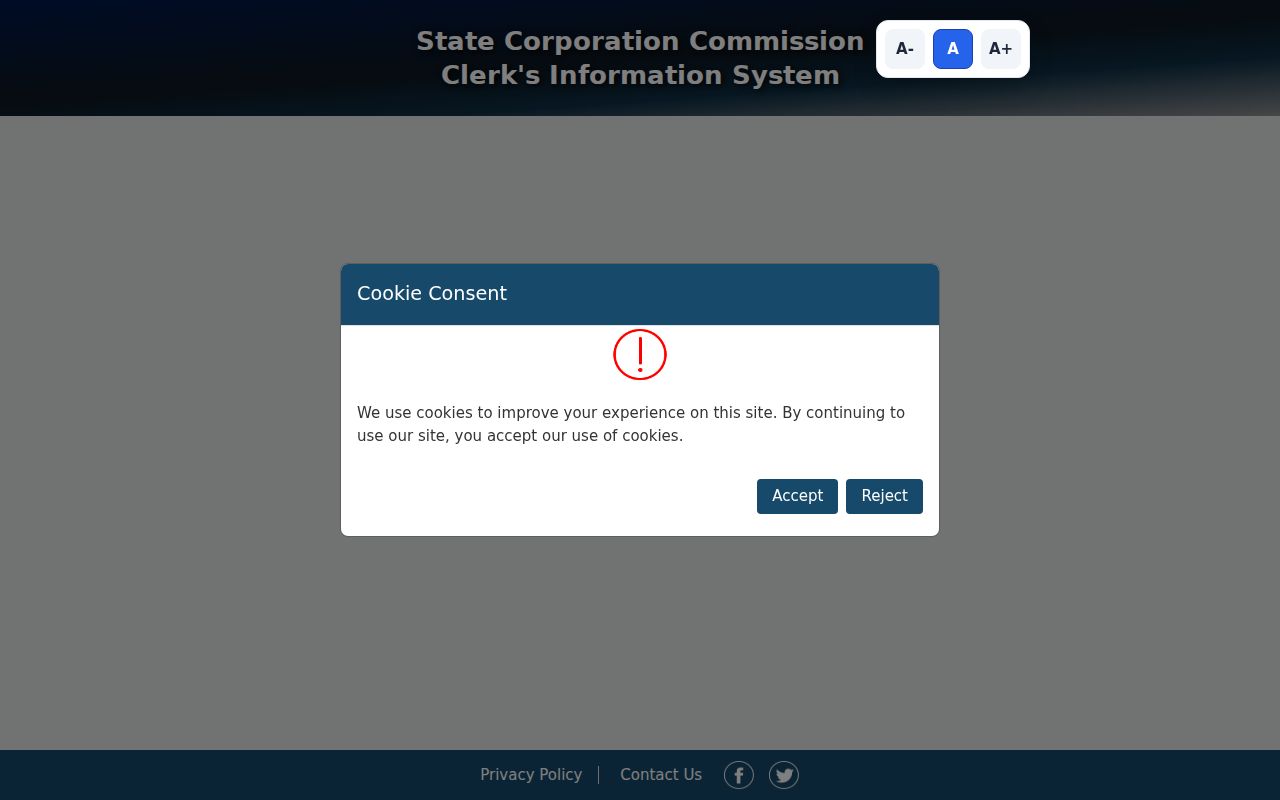
A parcel may be assessed to a company, trust, estate, or fiduciary instead of a person's familiar name. Search by the entity's legal name next. The Virginia State Corporation Commission's Clerk's Information System is the place for that, and its filings can reveal a registered agent or filing history. Those filings are not proof of ownership. The recorded deed ties the entity to the land.
The official Virginia SCC business search is useful once a company name surfaces in the property record. The image shown here is the state entity search portal. It is not a property record. Nor is it a verified Franklin City owner result.
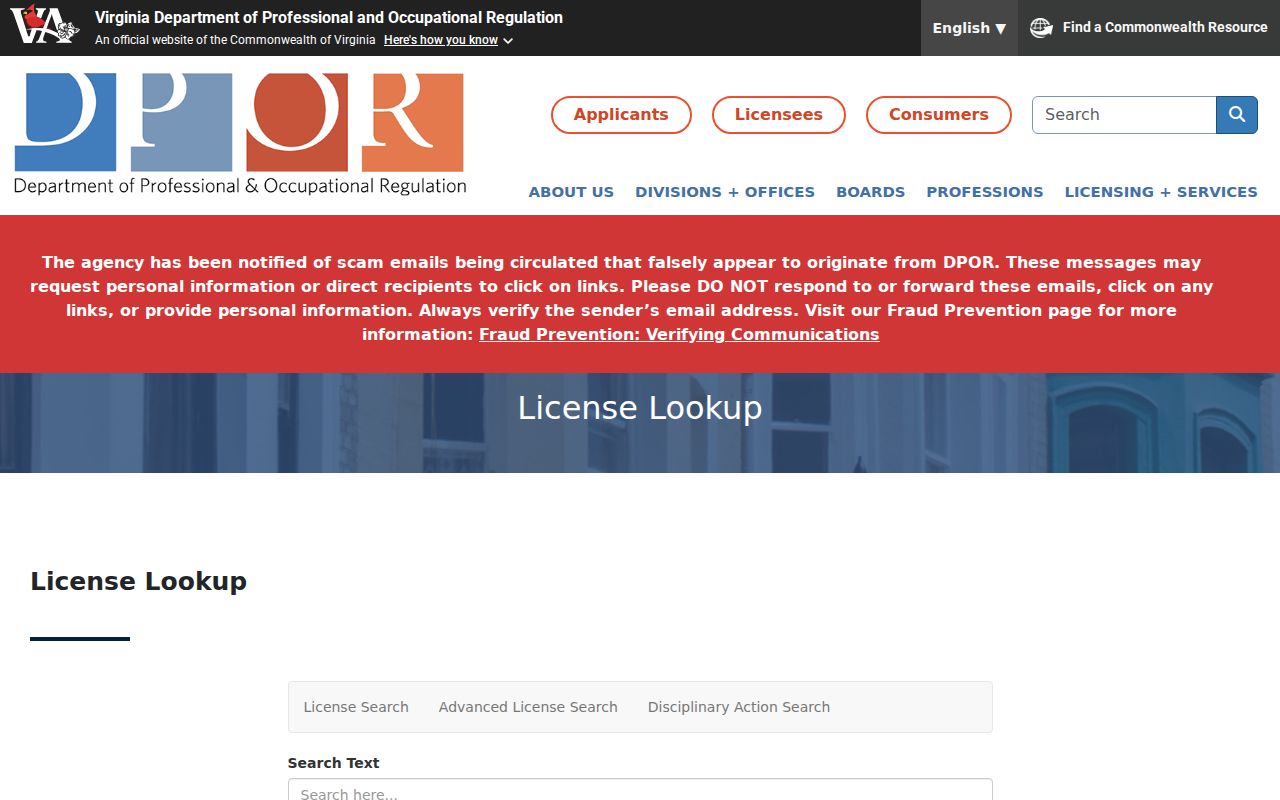
A contractor in a planning file is a different question. Virginia DPOR can verify a license. That record is separate from title. A licensed contractor does not own the property by virtue of the license. The listed agent is not automatically the owner either. The Virginia DPOR license lookup is a limited check for professional credentials. The page shown is the statewide lookup, not a Franklin City permit record.
When a Franklin City Property Owner Entry Is Out of Date
The Vision portal updates Franklin City real-estate information monthly. The current reassessment took effect July 1, 2024. Monthly updates do not establish an average closing-to-roll delay. A recent deed may name a new grantee while the roll still shows the prior owner. Compare the recording date and ask the Commissioner when the roll will reflect the change, rather than calling the difference a fixed lag without a City source.
Always match the same parcel number and legal description. That avoids a false mismatch. A name may sit under a middle initial, an entity suffix, or a fiduciary capacity. The newest deed can also hide behind the SRA image subscription even when its index entry is visible. If the image will not open online, ask the circuit clerk how to request it.
A public search gives a point-in-time view. Note the date you checked. Verify material questions with a custodian or title professional.
Franklin City Property Owner Addresses and Privacy Limits
A mailing address is not always the parcel situs. That gap shows up often. Entities hold land. Managers receive bills elsewhere, and some owners simply prefer a different mailing point. Franklin City assessment records may list the mailing address on file. Treat it as part of the property record. It is not a green light to track a person down. Keep the search anchored to the parcel and the deed.
Virginia runs a Safe at Home program under its Address Confidentiality Program. It gives protected participants a substitute address and shields their details from routine public-record handling. If an address looks withheld, leave it alone. Do not try to work around the shield. Never piece together clues from other public sources. Franklin City property records exist for lawful research, boundary review, and civic transparency. They never exist for targeting anyone.
ZIP codes mislead too. A Franklin City ZIP can cover land inside the independent city. It can also cover land in Franklin County alike. The label never settles the locality question. Confirm the jurisdiction and the parcel number in the City's own systems. Do not draw any conclusion from a mailing address alone.
Why Franklin City Tax and Maps Do Not Prove an Owner
A tax account in Franklin City proves a bill was issued or paid. It does not prove ownership. Only the recorded deed does that. The Treasurer's delinquent lists are dated snapshots. The City describes one list dated October 11, 2023. The City also warns that penalties and interest sit outside the figure. Any payoff amount must come straight from the Treasurer. A tax-sale notice carries its own terms and flags liens, easements, and boundary risks.
The mapping tools, CivQuest and Atlas, orient you to parcels. The City says plainly that the map is not a survey or a legal representation. Pull the assessment number, find the map, then compare the deed and any recorded plat. That comparison matters most along roads, rivers, rail lines, and shared boundaries.
An owner question should end with the instrument. A tax screen or a GIS map can help you find the deed. Neither one can stand in for it.
Limits of a Franklin City Property Owner Lookup
No owner lookup is airtight. The public name on the tax roll may lag behind a freshly recorded deed. The name itself might belong to an estate or an entity rather than a person. Private agreements stay private. Title questions need a professional. Statutes can close off parts of the record. When the owner field and the recorded document disagree, ask the custodian to walk you through the record trail. Guessing solves nothing.
Lawful use. Use Franklin City property information for property research, due diligence, and civic purposes. Do not use an owner name or mailing address to stalk, threaten, harass, or harm anyone. A title question belongs with a qualified title professional.
For prior transfers, work backward from the newest deed and confirm each legal description along the way. Public records support careful research, but they never license personal targeting.